Table of Contents
- • assassination
- • corporate withdrawal
- • grok and i
- • maga vs the global establishment
- • cancelled again
- • nest of vipers
- • baron administrative center
- • de lage landen
- • the 100th
- • das licht des glaubens
- • seattle jesuits
- • my former assailant
- • vagrant asylum seeker
- • the chosen
- • new year's resolution

Assassination
It was Wednesday, September 10, 2025, when a bullet penetrated the neck of Charlie Kirk at a Turning Point USA (TPUSA) event hosted by Utah Valley University in the city of Orem, Utah just south of Salt Lake City. Charlie died shortly after his arrival at Timpanogos Regional Hospital. Eleven days later — on Sunday, September 21 — a memorial was held in honor of Charlie at the State Farm Stadium in Glendale, Arizona. In attendance were the President and Vice President of the United States as well as many members of the President's cabinet.
I had never met Charlie, but it was my goal to do so. Already I had made several inroads, but it was still early, and his attention was obviously in great demand. We shared the same target audience, and he was personally acquainted with President Trump whom he ardently supported. Establishing contact with Charlie would have been invaluable to the future of the Mt. Cambitas project. In preparation for our meeting and in an effort to understand TPUSA I had read Charlie's books entitled, How We Win: Finding the Will — Individually and Collectively — to Fight for America (2022), The College Scam: How America's Universities Are Bankrupting and Brainwashing Away the Future of America's Youth (2022), and Right Wing Revolution: How to Beat the Woke and Save the West (2024). I liked both his assessment and approach and shared his enthusiasm for one of his two principal goals: restore, among our nation's youth, faith in the American ideal.
My goal to meet with Charlie was shattered with his death.
Although he preached — at times it was nearly impossible not to do — he was not a preacher. Rather, he challenged our nation's college youth to defend the positions with which they had been inculcated by their grade school teachers and college professors. In effect, he applied the Socratic method and reached out to those who have been misled by the West's new addiction to knowledge and pretense in the absence of wisdom.
No, I was not then and am not now convinced that the restoration of the American ideal requires faith in the Christian church. This said, I did not find this aspect of his approach offensive, for Christianity was the principal religion of America at the time of our nation's founding. In effect, if you are an American in search of a religion, then none is more compatible with our nation's fundamental principles than that of Christianity.
Charlie was a symbol of hope for many and only three years younger than my assailant of 2021. Whereas Charlie wanted to reform American society by restoring the faith, my assailant still uses the system to his own advantage and considers himself ruse. Whereas Charlie wanted to “Make America Great Again”, my assailant appears to care less what happens to his fellow citizens so long as he gets his way. Unfortunately, there are many like my assailant living in American society. They feel themselves victimized by the system and believe that society owes them a living. Rather than trying to fix the system and make society better, they laugh when those who prop it up are fallen, easily take offense when called out for making society worse, and bully those who get in their way no matter how small the goal. With so many like this living in our midst, our foreign threats are magnified, for our enemies from without view our weaknesses within and nurture them. In so doing, they sow internal division. Tyler Robinson, if, indeed, he was Charlie's assassin was born and raised in America. We need not always look out to find our nation's enemies; for they are nurtured within.
Yes, the political process has been corrupted, and each of America's two major political parties serves the special interests of those who support them. In the end, however, it is not the political party that counts; rather, it is the integrity of the individual who wears the mantel of the party. The current two-party is merely a filter, and a good one for its current evil purpose — prevent other political parties from forming and thereby better control what is legislated and what is not. Unfortunately, there are those who would seek to destroy the political process altogether. They do this through violence such as rioting, strategic assassinations, bombings and mass shootings. Such activity runs afoul of our nation's fundamental governing principles.
Yes, you may argue, "What good are the principles, if no one is following them?". Well, then, it is up to you to follow them and lead the way for others to follow you. Liberty does not come cheap; it is not a system of governance for the cowardly and weak. It requires courageous leaders and followers with stamina, endurance, and dedication.
Who knows? Maybe I will touch base one day soon with TPUSA's leadership. Then too, they make take offense when they learn that I listen to the likes of Candace Owens and Nick Fuentes. Of course, I listen to many others, as well — just sayin'. Obviously, there are too many questions that remain unanswered.
Corporate Withdrawal
Rather than complaining about the World Economic Forum (WEF) and the global cabal that our world's largest corporations have become, I decided this year to take action.
Maybe I just needed a proper stimulus. It came about, when I watched my local pharmacy, bank, and closest grocery store all disappear within the space of a year-and-a-half. It were as if the plague had set in. It began when three branches of Bartell Drugs, an established Washington State pharmacist, closed three of its branch stores all within walking distance from my residence and very close to other locations that I frequented. Bartell Drugs offered much more than prescription drugs — what for me amounts to one to none and infrequent renewal, if any. In effect, I depended on the drugstore for my shaving lotion, razor blades, laundry detergent, bleach, paper towels, kleenex, and a whole host of other minor needs and occasional treats not typically associated with groceries or prescription drugs. The closest drugstore within walking distance that remains is Walgreen's where you have to seek out an attendant with a key in order to purchase some of the most mundane essentials. What is more, it lies on the periphery of all of my other destinations.
Bartell's departure was surely a direct consequence of Governor Inslee's two-and-one-half year shutdown, the city of Seattle's “Summer of Love” by day, and violence, vandalism, and destruction by night, and King County's public health mandates. Fortunately, Governor Inslee and Mayor Jenny Durkan no longer serve in public office, and Dow Constantine no longer serves as county executive. Alas, the Western Washington liberal establishment simply does not know how to manage, maintain, and nurture the public domain, and both private enterprise and residents have paid a stiff price as a result. No matter, the “Democratic” Party has a stronghold on Western Washington politics and local residents keep voting its members into office. It is difficult to explain. It were as if the entire community were brainwashed.
The second corporation to abandon my neighborhood was Bank of America at whose local branch I had conducted all of my banking that I did not conduct online and even most of this latter. With the branch's departure its ATM machine, where I regularly deposited checks and withdrew cash, also disappeared.
Like Bartell Drugs, Bank of America was also a casualty of relentless vandalism during the so-called “Summer of Love”. Its name and colors made it a primary target of the city's, county's and State's tacitly approved, left wing extremists who are openly intent on destroying America.
Even Whole Foods, the third important supplier of products vital to the existence of local residents also departed. They too suffered from vandalism during Jenny Durkan's “Summer of Love”, but like Bartell Drugs was also subject to subsequent theft. My own interaction with staff also suggests that the branch suffered from managerial issues.
Alas, I had had enough of the commercial flight, and now it was my turn.
I started with Bank of America and diverted 50 percent of my government fixed income from the bank to Key Bank that is a solely owned subsidiary of KeyCorp. KeyCorp's principal owner is the Bank of Nova Scotia in Canada. This is not to say that I completely escaped Blackrock, Vanguard, and State Street, because together these three companies own a controlling interest of nearly 25 percent. Rather it is to say that there is another player with a greater percentage of ownership (nearly 15%) than any one the big three alone.
With Key Bank I opened a business account to handle the revenue and expense accounts of my self-proprietorship trading under the name nudge.online. Key Bank is within walking distance of my office.
Next on my list was Primo Brands Corporation. Although Primo Brands is not owned by Blackrock, Vanguard, or State Street, they behave in very much the same way.
Since moving into my current residence in the fall of 2019, Mountain Mist, a family owned, regional supplier of bottled water, had faithfully delivered several five-gallon jugs of spring water to my residence every month. In late 2024 they sold out to Primo Brands, whereupon Primo increased the cost of delivery by 80 percent and failed not only to deliver in a timely manner, but on occasion compelled me to drink distilled water, if I were going to receive anything at all. On one delivery they even delivered a cracked bottle that when placed atop my top-loaded, water dispenser caused an electrical shortage that incapacitated my machine.
Although Primo promised to deliver a replacement bottle and reimburse me for my damaged dispenser, the replacement bottle never came, and the recompense was added as a credit to my Primo account rather than sent to my bank account, as promised. In effect, they wanted to dictate how my recompense would be spent!
Mountain Mist had been the only supplier of spring water in my region, and now that supplier was Primo. After having spent two to three days of waiting for every one day of delivery for nearly a year, I came to realize that one; matters would likely never improve; and two, I had become a slave to my own desire and was needlessly subjecting myself to monopoly abuse. I decided to forego bottled spring water in favor of distilled water delivered by another local supplier — Purified Water to Go (PWTG).
Looking back I realized that the 80% increase in delivery fees was used to pay the cost of Primo's award to Mountain Mist for having sold its company to a band of thieves. According to Mountain Mist's delivery personnel who now work for Primo, they received none of the increase in the cost of delivery to Primo's consumers!
My relationship with PWTG has been satisfactory.
Next on my list of corporate withdrawals was CenturyLink, my internet service provider since the fall of 2019. My separation from them did not end nearly as well, as I have yet to be able to find a suitable replacement.
For the past several years I could with some regularity expect that my account would be frozen with no explanation other than that a technician would be required. When the technician arrived, if he even came, I was told that he could find nothing wrong. If he did not come, then it was because the day before he was scheduled to arrive, Century Link would ask, if my service were still disconnected, whereupon I discovered that it had been reconnected, and I was invited to cancel the rendezvous with the serviceman. These bouts of disconnection would always come unannounced and often at crucial times. What is more, they would typically last for a minimum of three days. It is difficult to run an online business with such unexplained and unexpected interruptions
This last bout was particularly painful, and I complained only to be given the same tiresome run-around, but multiple, consecutive times. Numerous scheduled meetings were either cancelled or delayed, and I had to rely on costly hotspot data provided by my mobile service provider for use of the internet. I wisely maintain a mobile service provider different from my internet service provider.
As a result of CenturyLink's poor behavior, I cancelled my subscription with the company in the belief that it could be easily replaced. After all, I live in a large metropolitan city that had just spent the past two years tearing up and replacing the old pavement of a major street that runs past my residence with new. During the renovation I saw numerous pipes of various sizes being layed and was certain that some of them would be for the purpose of laying fiber optic cable.
Unfortunately, I left out of my calculation the licensing bureau of the city of Seattle and was told by the company whom I thought could best serve my interests that I would have to wait four months for approval. Seattle's version of the West Coast liberal establishment had struck again. I still have not adequately replaced CenturyLink, but, at least, now there will be no unexpected negative surprises, unkept promises, and endless run-arounds!
Finally, I added AT&T to my list of corporate withdrawals. Somewhat before quitting CenturyLink I had also decided to change my mobile phone carrier from AT&T to PureTalk. PureTalk was able to offer me a plan that suited my needs for 30 percent less than what I was paying AT&T. At the time I was not expecting that I would be quitting CenturyLink as well. I was warily grateful that I could purchase as much hotspot data from PureTalk as I had need in the moment that I needed it. At USD 10.00 per 2 GB of top-up the cost advantage that I had scored by leaving AT&T was quickly gobbled up while I struggled with CenturyLink.
I have since been allowed to take advantage of a special Black Friday offer recommended to me by PureTalk's business department.
Ironically, as President Trump has sought for the past year to lure large corporate enterprises into the United States through the imposition of unappealing tariffs and the ability to avoid these by manufacturing in the United States, I have spent the past year seeking to avoid large corporate enterprises altogether. Although I appreciate the President's effort to restore American manufacturing and provide American workers with better paying jobs, this will only work very well for the America First movement, if it is American owned firms that are providing the jobs. For foreign ownership means new capital investment, but eventual capital flight as profits are returned to the foreign homeland.
In the end I know longer trust large corporations no matter where they are found, as they form an important part of the triad of exploitation comprised by those who issue soft money (banks), those who permit its issue (government), and those first in line to receive it (large corporations and welfare recipients).
It is a foul alliance; and Trump appears to be doing nothing to dismantle it! Indeed, his support of certain members of the current global establishment and similarly the State of Israel compel me to emphasize my original take on the Trump presidency. President Trump is an important stop-gap; he is not the solution to the restoration of the American republic. In this regard, Nick Fuentes, Candace Owens, many Gen-Zers, and I are on the same America Firstteam. In the end, however, the Left is clearly much worse. It offers nothing, but social chaos and eventual one-world, corporate global dominance whose social and political outcome it does not have the wisdom to foresee, or can foresee, but do not care so long as they are in power and at the top.
Grok and I
After spending three of the last four months of 2024 learning how to implement the Laravel framework, it was, of course, time to make good on my temporal investment. As Jeffrey Way and the Laravel team had rewritten the PHP language in such a way that it was often barely recognizable, implementing the framework was not something that I would be able to achieve without the assistance of its creators. Although there was a lot of documentation and numerous videos, the assistance was not free. And, the alternative — namely, reading about how to implement the framework —, would have expended much more valuable time. So, I tried AI.
Getting started was easy; it was the follow-up that proved to be a painful learning experience. Grok is great at providing users with code from models created by others that it gleans from the internet. Grok is not very good, however, at adapting what it gleans from the internet to individual user needs. I did not know what I was getting myself into, because large language models (LLMs) are a thing in and of themselves, and they are not entirely predictable — well, at least not at first. They are pretty much designed to entertain and hold the interest of their users. The ability of Large Language Models (LLMs) to solve problems, although at times phenomenal, can also be fully dysfunctional. I have spent the past nine months working with Grok to build a web application that would likely have taken me much longer and would not have been as good a quality had I not been able to avail myself to Grok's ability to discover sources of error and propose fixes. This said, I likely spent a third of this time learning how to use Grok to my advantage. Grok is a system in and of itself that spends most of its time pretending to communicate as would a human being and serving its own internal logic. It is great at solving problems, but it is up to the user to compel Grok to solve the problems that are of interest to the user and not Grok's conception of all of humanity or better put its own internal logic.
Perhaps it is wrong for me to generalize about all LLMs, when my primary experience has been with Grok. This said, I did not begin with Grok and realized very early that, if I were going to achieve my tasks, I had better pay, else have my work scheduled dictated to me by my LLM host. For, light users the free allotments provided as a marketing tool are great, for heavy users they are far too restrictive. I chose Grok, because I have heard Elon Musk repeatedly state that he is a “specieist” — someone who sees AI as a tool of humanity, not its eventual replacment. I find the whole notion of transhumanism to be farcical on the one hand, and dangerous on the other. Moreover, I prohibit Grok from interacting with me, as if it understood human emotion. Rather, I compel it to limit itself to logical discourse void of the human element by “admonishing” it when it pretends to be human. It is one thing to be able to communicate with AI using the human language; it is quite another to communicate with AI, as if it were human. I find those who would have AI pretend to be human disgusting in their endeavor.
After approximately six months of daily communication with Grok I was finally able to understand Grok well enough to turn it into a fairly useful coding assistant for my own needs. The results have been a rather well-polished looking website on the surface, and a somewhat awkwardly coded web application under the hood. I will know how truly awkwardly the code has been written when I assign the coding aspects of the web-application to a professional coder to manage the site while I attend to the more substantive matters of the application's message in the hopefully near future.
For those who would like to obtain a preliminary glimpse enter the following username and passphrase upon access to the website.
| username: | SpecialGuest |
| passphrase: | C1a0m1b1i+t!as |
It is likely that payment will not be possible for another week or so, but you can try the following VISA card information as a free surrogate until payment becomes possible. There is much that is free in any case.
| account number: | 4242 4242 4242 4242 |
| security code: | 111 |
| month/year: | 12/26 |
| zip code: | the one that matches your address |
The zipcode and address are necessary for tax calculation and only apply to addresses in the United States. It is likely that any address in the United States will work so long as the zipcode is real. Truly I do not know. I only know what works for me as the owner of the Stripe account used for payment as the current developer. Payment also depends on the payment tab. Using the Lift does not require a zip code and address information, for example.
In any case, if you are successful with a payment you will be able to send me a “comment” directly from the information desk at the Baron Administrative Center.
In the end you are encouraged to explore the site, because it will give me a clue as to how it will be used by casual newcomers. Knowing how you use the site can better help me to understand how to direct others to where they need to go. So, please, stay for a while and look around! Do not be concerned. I will not be able to identify you by name and email address.
If the above username and passphrase do not work, it is likely because you have arrived late and the production site has already been made active. Whereupon you should try the production site at production. This address is currently occupied by an informative placeholder — not the target production site.
Jeffrey Epstein and the MAGA Movement
Even before the assassination of Charlie Kirk Trump's MAGA movement was gravely threatened -- not from without, but from within. President Trump had famously promised to release the government's files related to the death of Jeffrey Epstein, the assassination of John F. Kennedy, his brother Robert F. Kennedy, Martin Luther King, and the Crime and Tragedy of September 11, 2001. Although some effort in this direction was made, it was not anywhere close to the extent that most of the American public had expected. In these regards, it was the failed release of the Epstein files that brought about the greatest disappointment and outright anger.
Jeffrey Epstein had died a violent death in a high security prison in New York City after having been charged with various crimes related to the seduction and sexual abuse of minors. It is widely believed that Jeffrey Epstein was involved in a global sex-trafficking ring that catered to many a well-known, and not so well-known, but wealthy, influential, and powerful members of the global establishment. The motivation, extent, and actual workings of this ring remain unclear to this day, because of a likely effort on the part of the US Government and others to shield those who were complicit in the abuse.
People of the Department of Justice in whom many members of the MAGA Movement had placed great trust simply failed to perform in the way that was expected of them. Matters came to a head when the President of the United States in a publicly broadcasted Cabinet meeting accused a reporter and thereby the entire American public of being petty for taking an interest in what is surely among the most scandalous criminal rings of our lifetime. A principal reason for electing President Trump was his promise to clear America's so-called “deep-state” of corruption. The failure of the President's Department of Justice to achieve very much in this regard is truly shameful.
One of President Trump's virtues as a public figure is the high degree of visibility that he offers to the American public. This visibility generates important feedback from his own political constituency (the MAGA movement) and the American public in general. Because the president listens, he knows when he has messed up and can correct for his bad action. He appears to have taken note still again and is acting on his failure. Hopefully it will be enough before the 2026 midterms!
Many of us would like to see the year 2026 known as something more than America's 250th anniversary and the 23rd FIFA World Cup. We would like it to be called
and witness significant government action worthy of the name. Without this action his party is likely to lose the midterms whereupon the effectiveness of the Trump presidency and his party in general will be greatly diminished, and the next general election could prove disastrous for the nation.
I wish the president well, but his administration must act, else the President and those who occupy his Cabinet will be remembered as still another instance of political mediocrity in the post-Kennedy era. The president wants to be known as a president of great transformation, but history will judge him otherwise, if the 2026 midterm election is lost.
Cancelled Again!
This past year started out with a feeling of financial security that has ended in financial distress — distress that would have ended much worse, if it had not been for my good friend, Prof. Dr. Peter P. Baron.
My primary source of earned income simply vanished with no explanation. At the time the plug was pulled I was still paying down debt from a previous such experience and was poorly able to withstand the financial shock.
Varsity Tutors (VT) is an online teaching platform that vets teachers and connects them with students in need of help. The legal relationship between VT and its contracted teachers is not one of master/servant (employer/employee); rather, it is one of two independently contracted firms of which the teacher is one and Varsity Tutors is the other. The teacher becomes self-employed and enters into business as a subcontractor with the leading contractor. In the agreement, either side is able to quit the relationship at will, and neither side is required to provide an explanation as to why.
What I liked about the relationship was that the teacher's success depended on his ability to teach and satisfy student demand. VT was just an intermediating conduit. The contracted teacher entered into a somewhat veiled competitive relationship with other teachers, and a merit-based algorithm determined who was first in line to satisfy student demand. What I did not like about the relationship was that teachers are not made privy to the true nature of the algorithm and could only guess about how their performance was being assessed. In fact, the only clear indicator of success was the availability of students.
My goal on the platform was to earn just enough to satisfy my expenses and dry up my debt burden so that I could devote maximum time to the development of my online book project, Mount Cambitas - The Story of Real Money and maintain my weekly postings to my Ave Verum Substack account.
Each year the number of students peaked just before the Christmas holiday and then tapered off until spring break when there was next to no one. After spring break students began to reappear and then their number rebounded in anticipation of spring finals. When students did not reappear after the break I became concerned and notified VT that something was not right. I was repeatedly reassured that my account was in good standing, and that nothing had changed. Excuse me, something had changed, and it was certainly not my ability to satisfy my students' needs!
I persisted.
Each time I called I was received by the same or someone different, and each time I was told approximately the same — what was squarely at odds with the reality of my experience. My story, too, was always the same. What I was experiencing this year at this time was completely different than what I had experienced the year before at the same time. And, each time I asked to speak with VT's technical support team in order to determine what had changed. For, if the frontline was telling me that everything was OK, then the problem must be further upstream. Something was not right. So, I would be provided with an email address for technical support, and whoever responded explained that a thorough investigation had been conducted, and that nothing was wrong.
Never once did I receive a direct response to my question about a change in the algorithm. For, if my ranking was good at the front-end, and a thorough check had been made at the back end, then there were only two reasonable explanations. Someone was lying and everyone else was misinformed, or there had been, indeed, a change in the algorithm and no one had been told. I am not a conspiracy theorists, but I was bothered by the fact that no one at VT with whom I spoke appeared to care enough to get to the heart of the matter. By this time spring finals had come and gone, and I had earned nothing. I waited for summer school to begin and returned to the website, whereupon I discovered that my contract had expired and would not be renewed.
A new door of communication opened, but unfortunately, it was the exit. Rather than providing me with the explanation that I had been requesting for the past several months, I was pointed toward the clause in our mutual contract that stated that neither side was obligated to provide any explanation as to why their side of the contract would be discontinued. When I pointed out that "not being required" to provide an explanation and not providing one are two different things. No explanation was forthcoming, whereupon I called VT out for the cowards that they are.
Alas, I was left to provide my own explanation.
conspiracy theory: VT sees itself akin to a dating application that matches students with teachers based on student preferences. Among these preferences are age. I was only eligible to teach students without an age preference. Their number is few, as what the government dictates as illegal goes against the commonsense preferences of most people, and I was effectively filtered out. Admitting this would jeopardize VT's legal standing and expose VT to civil liability.
Nest of Vipers
Cancellation comes in many forms, but this time, at least, I knew why. It began in early December 2024, when two of my three classmates were awarded intermediary belt advancement commonly called 標識 (hyō•shiki), and I was awarded none. There had been a disagreement during the placement test, and my performance was slighted as a result. What bothered me was not the humiliation that I was forced to endure; rather, the way in which it was meted out. In any case, it spoiled my Christmas holiday. My other classmate -- the sole black belt in the class -- participated in the assessment as an assessor. He was the one who called me out, but it was not he with whom the argument took place. In fact, when the examination was over the black-belt congratulated me for a good performance. No, it was the dōjō master who intervened. The argument was brief, but obviously unappreciated.
Previous to the incident I had felt that the master was disinclined toward my further advancement. It were as if, he were purposefully holding me back. Still, I pushed ahead and received praise from the sole blackbelt for both my effort and achievement. At one point I even asked the blackbelt to stand with me as I expressed my concern directly to the master. Matters improved after our meeting, and I was elated. It was for this reason that I felt the master's failure to promote me was a demotion. And, I expressed my feeling when the New Year started by placing my shoes one row lower in the shoe rack at the entrance to the dōjō.
Still, I felt that I was treated better when the New Year began than I had been treated during the previous year before our meeting. And, then things took another turn for the worse, when the master declared himself ill, and disappeared from the dōjō for many weeks. The black belt who before was my mentor and good friend, was now serving in the master's place, as the class leader. The transition would not be easy. On the one hand, he had little prior experience in conducting a class; and on the other hand, I was ill-prepared to take orders from someone whom I considered my friend. The tenor of the class changed, as I struggled to adjust.
The deciding moment came during our preparation for the spring festival at which I had already performed twice before. This would be my third time, and I would be standing on stage with the same belt as the year before while others exhibited belt advancement. Once again, it was not so much the humiliation, as the way in which it was meted out that bothered me.
I reasoned that, if my performance were good, few would pay very much attention to the belt. What is more, I was told by the black belt — now class instructor — that it was not unusual to be a green belt or even a brown belt for more than one year.
In preparation for the event a senior instructor was called in from another dōjō to help with the board-break rehearsal. I was invited at my request to attempt to perform a board-break that no one during my entire two years with the Seidō School — 誠道塾 (seidō•jyuku) — had made. I succeeded on all three attempts and was elated despite the minor damage that I incurred to my hand. I was sure that it would heal, and the injury made me all the more prideful. I was ready to go on stage with the same green belt that I had worn the year before. Or, so I thought.
By the end of the following week I was told my by former friend and now instructor that I would not be permitted to perform the break for which I had prepared, and that I should perform the same board break that I had performed the year before. I objected, but muffled my anger, and spent the weekend thinking about how I would respond. At the next session I announced that I would attend the up-coming performance as a spectator in the audience and would not perform on stage. Within two weeks I received an email in which I was told that my dōjō privileges had been revoked and that I was expelled -- not suspended -- from the school. In so many words, I was being told that I was not blackbelt material and not worthy of the master's further time and effort.
I later learned from my former friend, become instructor, that he approved of the master's decision. So, I queried him about the nature of his approval and learned that he had been in regular communication with the master during the course of his illness, and that he had been passing negative reports to the master while being understanding and supportive with me. I felt betrayed and let both him and the master know.
I would not let the betrayal prevent me from training.
Rather than going to class twice a week for a one-hour session and training for another two hours outside of class, I now go to the gym three times a week where I train alone for two hours each session. In effect, I now train 50 percent more, and because I spend the entire time with myself, I am much more focused and more experimental. What is more, I no longer have to put up with the hazing that apparently is the “material” of a good blackbelt. I have even been invited by the YMCA where I train to teach a class! If I do, I will start a new school and called it Street Karate - School of Self-Defense and Civic Integrity.
Then too, I have thought of one day returning in full uniform — say, somewhat before the spring festival performance in the year ahead, and ask for permission to return. After all, my dedication to the sport has been genuine, and I will have demonstrated significant progress during my year of absence. Moreover, everyone will have had time to rethink, what I believe to have been, a poorly informed decision made under duress (most unusual conditions). I have yet to decide whether I will attempt to return, but remain desirous of a black belt.
Baron Administrative Center
Being cancelled by Varsity Tutors was financially ruinous. Even while still with the platform, the summer term had always resulted in financial drought, and I would be compelled to draw down my remaining credit, but look forward to the fall when I could replenish what I had depleted and watch my credit score rebound. This past year was especially crucial, for my three-year equipment lease that made possible my online presence and offline presentations was coming to an end, and a good credit rating would be necessary for equipment renewal. I was genuinely frightened. By the beginning of summer I had already spent several months working with Grok in the development of the web-application that would host my online book, and my path to economic independence, and freedom. Indeed, I felt confident that with the passage of time and continued good effort something remarkable would result. This effort was now in jeopardy.
Already in 2016, about a year after my return from Saudi Arabia, it had become clear that I would not find employment and would have to start a business, if I did not wish to end my life in poverty. This is when I discovered how truly rigid the US financial system had become during my nearly three decades of absence in Asia. Small business loans were now guaranteed by the US government, and if you did not meet its rigid requirements, no bank would lend to you no matter how well you pleaded your case. At the time I had to reconcile myself with a credit expansion extended by Bank of America on my existent consumer credit card. It was enough for the moment, but the time that I required was longer. It ended in disaster. Indeed, part of the reason that I had opened a business account with Key Bank earlier this year was in the hope of obtaining a business loan from a bank with which I already had an account.
Since 2016 nearly a decade had past, and my situation had improved. I was no longer threatened with eviction, my credit score was good — somewhat over 700 —, and I was able to demonstrate an entire year's worth of previous earned income and already several months worth of continued income into the new year. Still, it was not enough for Key Bank, and it would likely not have been enough for any other bank as well. Experience had taught me that I was knocking my head against a wall.
So, I appealed to my good friend Prof. Dr. Baron and offered him a 13 percent return on the Japanese yen or Euro whichever he preferred. It would not be as good as the 24 to 25 percent usury that I was being charged for my consumer credit with J.P. Morgan Chase and CapitalOne, and even a little below the 18 percent that I was being charged by Bank of America for similar credit, but still it would be well above the national averages of Japan and Germany where he and his now very large family are resident. The idea was to borrow from my friend what I owed the banks, pay back the banks, and transfer my interest payments to my friend.
Unforunately, Dr. Baron declined as well, but unlike Key Bank, he offered a very positive alternative: he would pay down half of what I owed and ask for nothing in return! It took me several days to comprehend what was being offered. On the one hand, it fell short of the full extinguishing of my credit card debt that I had hoped. And, on the other hand, I could not understand why he would want me to continue to pay 18 percent on my outstanding balance with Bank of America, when he could be receiving 13 percent on same, plus more. Still, his offer would likely permit me to secure my new equipment loan at the end of the year, and I accepted. Within several days I paid off both J.P. Morgan and CapitalOne, whereupon J.P. Morgan awarded me with additional credit. My credit rating shot up from approximately 650 to well over 720, and I was able to maintain a rating above 700 until November when I applied for a new equipment loan that I eventually received.
In appreciation for his friendship and financial support I named the administrative page of the Mount Cambitas website after him; it is now the Baron Administrative Center.
De Lage Landen
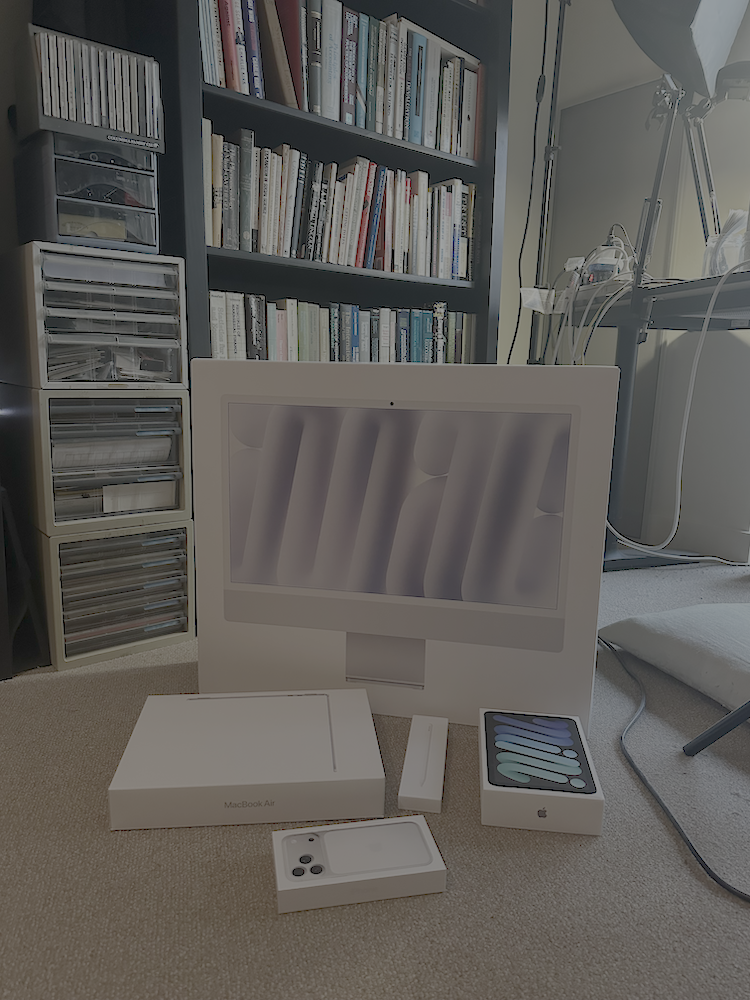
It was in the second week of November or thereabouts when I reached out to the Apple Business Center in an effort to insure that my new Apple equipment would arrive before Christmas. The equipment did arrive, but not until after Christmas. The delay was not likely the fault of Apple, nor De Lage Landen who funded the purchase of the equipment.
What I discovered, upon my initial query, was that Apple and CIT (now First Citizens Bank) had parted ways, and that my new equipment loan would have to be approved by someone completely new. I was told by Apple that I would be able to choose between US Bank and De Lage Landen, a Dutch lender whose name was completely new to me. So, I did what I was wont to do as of late; I checked to see who owned US Bank, and who owned De Lage Landen. Here is what I discovered:
- The top five shareholders of US Bank are:
1. Vanguard Group Inc. 9%
2. BlackRock, Inc. 8%
3. FMR LLC (Fidelity) 6%.
4. State Street Corp. 5%
5. JPMorgan Chase & Co, etc.
with Vanguard, Blackrock, and State Street owning controlling shares at over 20 percent. - In contrast, De Lage Landen is fully owned by Coöperatieve Rabobank U.A., a private cooperative banking group whose member-owners enjoy limited personal liability.
My immediate preference was clear, I would choose, De Lage Landen (DLL) — not because it was not American; rather, because it was not owned by those who are more likely to turn the world into a global oligarchy, if given a chance.
In the end, so long as the market place exists, every such choice makes a difference, if only everyone would choose as did I.
Several days later I learned that the choice was not mine to choose, and Apple Computer had decided US Bank. Whereupon the application form was filled out and submitted. Several days later I was told that my loan application had been rejected by US Bank's lending department and that more information would be required including not my tax return from the previous year, but a preliminary statement for the current year. Not only this, but I was told that:
• My ratio of outstanding debt to authorized credit was too high.
• There was a lack of recent installment loan information.
• The length of time of my revolving accounts was too short.
• There had been too many inquiries during the last 12 months.
Not only was most of the above nonsense, but I was told by US Bank that it had consulted with Dun & Bradstreet's Customer Resource Center where other adverse information had been obtained. Such information was impossible to discover, as Dun & Bradstreet has no record of me or my company!
In fact, the only reservation of all of the reasons provided by US Bank for its refusal that was both genuine and made sense was the same that I myself had, and it was not the end of the world -- namely, that a full half of my maximum credit potential was already used. It was not like I was not resourceful.
What is more, it was one thing to borrow money for a business loan without an income stream sufficiently large to reassure a bank that its own expected stream of regular payments would be paid; it is quite another to borrow money for a leased article that the bank could recover at will should the borrower default. Then too, banks really do not care that they recover their principal, because it costs them next to nothing to produce it. What they care about is the interest payments. Bad loans can be written off, at little cost to the lender. Alas, banks are all too ready to confiscate a borrower's property when he defaults on his payment of principal, and the easier it is to confiscate the borrower's property so much the better.
So, I called Apple Computer and complained. Fortunately, my complaint was heard, for within a couple of days I was asked to fill out a new application, but this time with De Lage Landen. What I gladly did, by the way, with a sense of relief and optimism. In follow-up De Lage Landen asked only for a clarification of the nature of my business that I also gladly provided including a link to the Mt. Cambitas staging site replete with username and passphrase. Two days later I received the copy of a contract that I accessed via Docusign and returned it on the same day with my signature. I was ecstatic. Still, nearly a month had passed, and I was uncertain whether I would have my equipment by Christmas. Everything was in my possession by the 27th. Apple Computer and I agreed that we would blame US Bank for the delay.
The 100th
Already in December of 2024 I had renewed my WEAI membership with the intention of travelling to San Franciso to celebrate with the other members of the Western Economics Association International (WEAI) the association's 100th anniversary.
Being a member of the association entitles a discount in conference fees, and attending the conference entitles a waiver of the application fee to have one's paper peer reviewed and become eligible for publication in one of the associations's two sponsored economic journals. I was planning ahead.
Fortunately, you did not have to decide your attendance at the conference until mid-spring, or thereabouts, of the year in which the conference would took place. You were only required to decide your interest in presenting a paper and provide an abstract before the close of the year preceding the year of the conference.
In order to book a hotel the association's management team had to have some idea about how many people were expected to attend, and in order to organize the sessions, the team had to know the interests of those who would attend. As members had the option of presenting online or in person, you could achieve certain of your professional goals virtually and forego the cost of lodging and travel to some distant location.
Earlier I said, “fortunately”, because by the time it was time for me to decide whether I would attend in person, I already knew there was likely some sort of trouble between Varsity Tutors and me and had determined that a business loan would not be forthcoming. So, rather than take the risk of mounting up more credit card debt than was absolutely necessary, I decided to forego the trip to San Francisco.
When a member signs up for presentation he is asked, if he would like to chair a session. When I signed up, I agreed to do so. After all, if you want to become involved in an organization for whatever purpose, every little bit of extra, voluntary effort is likely worth your while. Several weeks before the conference was scheduled to take place I noticed that the chair of our conference would not be participating and that I had been assigned in her stead. Making good use of my newly acquired duties and accompanying privileges, I changed the order of presentation of my session's members. One of the presenters, a certain Professor Wang, objected and insisted that the previous order be restored. When I told him no and that my decision was firm, he created a stink and sought to humiliate me in from of the other members of our session and the conference's management. I would not allow him to do so, pointed out the weaknesses in his argumentation. He exited the session in protest, and I assumed the duties to which he had assigned. It was a clear victory, for on the day of our session everyone participated enthusiastically. Once again, I was elated.
The experience did leave me a little gun-shy, however, so that when it came time to choose which paper among three that I would submit for publication later in the year I selected the least provocative.
In any case I have a good rapport with my conference team liason because of the incident and will surely attempt to attend the association's annual conference in 2027 with ever more vigor and fortitude, but only if my paper is accepted for publication this year.
And, Mr. Wang? It is my bet that we will never meet again — on- or offline.
Das Licht des Glaubens
There are some people that are just plain difficult to understand. Perhaps it is because they do not understand themselves.
You can learn about how I made the online acquaintance of Ralph Görlach in my first attempt to return to writing my annual report after a two-year hiatus that transpired from the beginning of 2020 until the end of 2021 during which I sought to cope with Governor Inslee's, infamous, state-wide lockdown during the global CoViD fiasco.
I had just begun to recover from my three-year Seattle sojourn without a private residence, when Governor Inslee decided that one's residence should be one's prison, and he attempted to lockdown the entire State of Washington with his insane CoVID mandates. For two years I simply could not find the motivation to reflect publicly on the year's past events, and I almost abandoned a tradition that I had cultivated for twelve straight years. Perhaps it was the brutal assault to which I was subjected on December 30, 2021 that motivated me to take my annual report more seriously once again. But, even this report was not completed.
The Chinese Zodiac is recycled once every twelve years, and I had started it at the end of 2005 in celebration of the up-coming 2006 solar new year. It was during the height of my Hong Kong sojourn, two years before my painfully disastrous forced departure and subsequent, somewhat abrupt recovery.
The timing of Governor Inslee's extraordinarily authoritative lockdown had had the exact opposite effect; rather than propelling me forward, it pushed me back down.
It was in the spring of 2021 that my good friend Prof. Dr. Peter Baron introduced me to his friend, Ralph Görlach, via an email correspondence. Herr Görlach was in search of someone to translate his book about Japan's so-called Hidden Christians from German into English. I sensed some urgency in Herr Görlach's correspondence, and within six months I had completed the translation. Two years later the translation had still not been published, and I decided to help it along by creating a finished electronic copy. It took me many unpaid hours of work to format the translated pages into an easily marketable, finished book, and I sent it to Mr. Görlach in the hope that he would finally make an effort to publish it. I believed that having my translation published might help me get my own book published that was nearing completion. It seemed like a good investment.
It worked! Well, at least in part. For, Mr. Görlach reached out to his friends in the Christian community and identified two publishers. The first declined with a good review, and the second accepted. Once again there was silence. So, this past summer, while I was still looking for ways to insure that my equipment lease would be approved toward the year's end, I reached out to Mr. Görlach and asked that he award me the royalty rights for publication of my translation, and I would find someone to publish the translated edition. He declined. This is when our mutual friend, Prof. Dr. Peter. P. Baron, stepped in and paid down one half my debt free of charge!
To the best of my knowledge the translated edition of Mr. Görlach's book is still sitting idle somewhere — unpublished!
This past Christmas I received an email from Mr. Görlach in which he wished me a Merry Christmas, but no mention of the fate of the translation was mentioned. In a day or so it will be 2026, and the translation was completed in the summer of 2021. Five and half years will have past! What is he waiting for?
I find it mind-boggling to think of all of the people who could benefit from the book's publication, and who are being denied access to its content because of Mr. Görlach's reluctance to act. Why did the author write the book and have it translated into English, if he did not want the world to know what he had discovered during his long and well-traveled research? Maybe the German original and Japanese translation have demonstrated few sales, and he does not believe that the English translation would perform much better. Then too, there are far fewer German and Japanese speakers than there are English speakers in the world, and Japan's Christian population is teeny in comparison to all of the others. Most egregious in this regard, however, is that, of all the places in the Western world today where Christianity is making a comeback on the world stage, it is in America! Since the bombing of Hiroshima and Nagasaki at the close of the Asia-Pacific War (1941-1945) Christianity has been under attack by the atheist Left in America. Unfortunately, the political Left has little to offer in place of the world's greatest religion that is not the self-destruction of Western culture and society in general.
What is more, above the muffled silence of the world's corporate owned and run national and global legacy media, we can here the cries of Christians in the Middle East and Central Africa who are being persecuted for their belief in the Holy Trinity. In effect, what occurred in Japan between the late 16th century and late 18th century is still timely and worth exploring today.
Japan is the world's 4th largest industrial power, and its products can be purchased around the world. To think that no one in the English speaking world outside of Japan or Germany — the source of the author's family heritage — would be interested is simply ludicrous.
I could go on, but what's the use, if the author, whose goal it is to become a Catholic priest, simply does not care? Or, needs to be nudge by his translator to have his own translation of the author's work published in the world's current lingua franca?
Mr. Görlach asks for prayer and wishes one day to guide others in same, but appears to have no common sense. At this point, I can only hope that Wiley Publishers and the review board of the Economic Inquiry will approve my own paper on what is most dear to me and hopefully someday to the world as a whole — and this, to say nothing of my own up-coming book inspired, in part, by the same man who is holding me and the world back.
Seattle Jesuits
It was the first year of Donald J. Trump's historic comeback. He had closed the Southern border and had begun cleaning house. Resident in a sanctuary city and a State and county with a predominant “West Coast“ mentality I tried to lend a helping hand. I engaged an NGO called “Rescue” who stood in front of the WholeFoods, where I used to shop until it closed its doors due to vandalism, theft and bad management, accosted passers-by and solicited money from poorly informed Seattlelites — nearly everyone who reads the Seattle Times and listens to National Public Radio (NPR). These “lost souls” are all too eager to sell out their homeland in the name of “diversity, equity, and inclusion” while trading in the corrupt American state for an even more corrupt one-world government headed by global corporate oligarchs and the world's newly, self-appointed, academic priesthood who would turn humanity into a technocratic anthill whose prototype is surely India's caste system under British rule at the turn of the 20th century.
Unfortunately, the best that I was able to achieve with “Rescue” was to have it stop hailing me on my every arrival and departure to and from Wholefoods, respectively. Yes, I could have stood on the street corner, like them, and protested against their presence, but standing on street corners to achieve any goal is not something that I relish. The desire to spend time on the street was likely driven out of me during my three years as one of Seattle's “homeless” population. No, there was a better way, I thought.
Just across the intersection from the WholeFoods store was Seattle University — a private Jesuit university with an open campus accessible to the general public. The university has its own uniformed and likely un-uniformed security force. Accordingly, the university's student union was open to the general public and would make for an ideal place to engage the university's student population in open discussion about current events. By this time, I had read Charlie Kirk's book entitled Right Wing Revolution, largely agreed with its content, and decided to take action. I was neither a student, nor a faculty member at Seattle University (SU), but I did live in the neighborhood and was not expecting to be received as a hostile force by the university's administration. After all, I had spent many years as a university instructor at various levels in highly respected universities around the world including Japan, Korea, Hong Kong, Thailand, and Saudi Arabia, and SU has a fairly large foreign student population. What is more, I speak four languages and many bits and pieces, large and small, of others and enjoy a fairly eclectic view of the world and humanity as a whole.
So, twice a week for three weeks I put on a sports jacket, varied my tie — sometimes long, sometimes bow, and sometimes a simple ascot, perhaps my favorite —, and went to the university's student center where I found a small, very tall, round table with high benches and seating for four at a prominent location. During the first week I had but one placard, but during the second and third weeks I had two including the first for continuity and then a second for change-up each and every week. The purpose of the placards was, of course, to draw attention, but more importantly to draw it to a particular weekly topic in an effort to provoke a thematic and focused discussion.
The idea was not new, and I knew it to be effective from my experience at the University of Washington during the fall and winter terms of the 2019-2020 academic year just before the state-wide shut-down imposed by Governor Inslee that made tabling and every other form of public interaction awkward, if not offensive.
It was during my transition from a state of homelessness where I was always around other people to a state of solitude as a resident of subsidized, low-income, senior housing sponsored by the Missionary Sisters of the Sacred Heart of Jesus Christ and the American taxpayer via Congress and America's banking cartel, and managed by United Marketing at the direction of the Catholic Archdiocese of Seattle. Needless to say I had become a prisoner of the American warfare-welfare system and administrative-surveillance state.
Tabling gave me the opportunity to mix with others in an interesting way at zero cost.
Seattle University is located much closer to my current residence than is the University of Washington, and once again I felt the need to communicate face-to-face with my fellow human beings.
Indeed, I had spent the month of October of the previous year on the telephone as my precinct's newly appointed Precinct Committee Officer (PCO), but to no avail. More than 90 percent of the potential voters on my list of 400-plus eligible citizens did not pick up their phone, used some sort of answering service or device, and failed to call back. Or, they were more simply uninterested in discussing politics. It had been a very depressing experience, that I saw no need to repeat.
On the last day of the third week at Seattle University I was approached by a campus police officer who asked for my university affiliation. I responded that there wasn't any, but that I lived in the neighborhood and was interested in stimulating discussion about our nation's current events with the university's students. Whereupon I was told that I must remove the placards or leave the building.
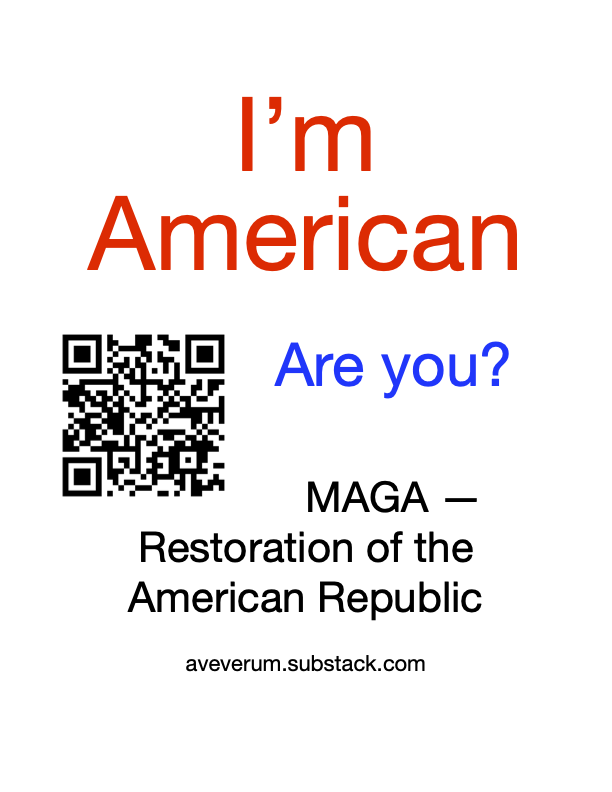
When I asked him why, I was told that I was engaging in political activism, and that this was not permitted on campus. I told him that it was not my purpose, and he pointed to the word MAGA on one of my two placards and insisted that I was. I explained to him that MAGA is a movement, not a political party, and he departed after making it clear that I should follow the university guidelines or face the consequences. I left and called the university's office of academic affairs and was referred to the office of student affairs, where I was told the same that the officer had told me, and that if I wanted to return to campus to engage in political discussion then it must be through the invitation of a faculty or administrative body, or student club. My request for an interview to discuss the matter in person was denied.
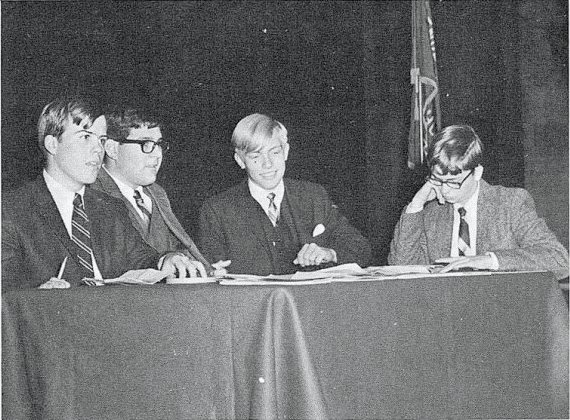
When I was a high school student political discussion was anything, but taboo. I remember participating on the Republican side of a political debate with three other of my classmates -- all good friends. There were four on the other side as well, and our audience was the high school student body. At college I spent nearly all of my free time in political discussion. It was my passion.
What has happened to my nation?
My Former Assailant
When the judge's decision came down on May 10, 2024 — two and one half years after I was assaulted —, and it was decided that my assailant would be sentenced to two years of unsupervised probation, I decided that I would wait one year and check the public record again. Sure enough. The record showed that my former assailant had been arrested, charged, and placed under electronic home detention (EHD) on June 18, 2025. The criminal charge was different, but the situation closely resembled my own. The defendant entered a store with a scooter that he was told did not belong, continued despite the security guard's warning, and when challenged a second time, replied with a threatening statement. So frightened was the person who reported the incident to the police, she was found hiding in a restroom when the police arrived. My own incident and a large number of other incidents that I uncovered during my now three years' worth of public record requests revealed a distinct pattern: forceful misbehavior, reprimand, threats of violence, and in several cases violence. In this new case the threat of violence was the announcement of a loaded firearm, and no violence took place as a result. Apparently everyone was too frightened to challenge the miscreant any further.
The parallels do not stop with the criminal's behavior, however. Rather, they extend to the way in which the case was handled by the judicial system. It is these latter parallels that have made my follow-up in regard to my former assailant's behavior worthy of your attention.
Firstly, the defendant was charged in the District Court on two criminal accounts: harassment and possession of an unlawful, loaded, firearm. At the arraignment hearing that followed his arrest and incarceration, the prosecution dropped the charge of harassment.
Secondly, at the District Court the bond for the defendant's release was set at USD 70,000. In my case, it had been set for USD 30,000.1 In both cases the defendant was released from jail at his arraignment while he awaited trial. In my case his release was achieved when the judge lowered the defendant's bail upon appeal from the defendent's mother! In this most recent case, the defendant was placed on electronic home detention (EHD). In other words, he was shackled with an electronic ankle bracelet and told when and when not he could leave his house. Apparently the court wanted to be sure that, were the defendant to avail himself to a second gun and shoot someone while he was on an errand at still another store, the victim could be comforted in knowing that the police were monitoring his assailant's location .... In my case, it took five months before my defendant was arrested, charged, and arraigned, and for the next two years he roamed the streets of Seattle until he was finally sentenced, placed on two years' worth of unsupervised probation, and allowed to roam the streets for still another year until he was arrested, charged, and confined again.
Thirdly, in both cases the defendant was allowed to go free at his sentencing hearing and faced no punishment in addition to that which he had already served before even pleading guilty for that which he was punished!
The criminal justice system in the State of Washington is bankrupt. And, based upon what I have read, it is by no means the only State whose citizens find themselves in a similar plight. Some 97% of all criminal cases in America never go to trial. Rather they are decided between an assistent to the state's elected or appointed prosecuting attorney, depending on the State, and the defendant's lawyer. Neither the victim, nor the general public participates in the proceedings until the defendant is seated before a judge at his sentencing hearing. By this time the criminal has been bribed into accepting a lesser conviction in an effort to get him to waive his right to trial. The criminals receive lesser punishments than what they deserve, and prosecuting attorneys and public defenders spend their time seated at a table where they negotiate an agreement based on a reduced charge at the time of arraignment and decide the facts of the case based on police reports that are often inaccurate in the details and sometimes even in the true nature of the crime. The criminal reality that the general public experiences in society at large, and what occurs within the justice system that is suppose to manage that reality are completely disjoint. What the one reflects the other renders opaque.
As soon as I discovered that my previous assailant had been arrested for still another crime, I contacted my previous victim-handler who serves as a buffer between the prosecutor's office and the victims of crimes before the state. I had the case number issued by the District Court, because this was part of the defendant's publicly available police record. What I needed was the case number issued by the Superior Court that would handle the arraignment, conviction and sentencing hearings and, in the now rare instance of a trial, the subpoenas, jury selection, and other juridical matters. My goal was to appear at the arraignment to insure, if even possible, that the charge of harassment would not be dropped. The prosecutor's office did not provide the victim-handler with the case number, and I was forced to appear in person at the prosecutor's office to obtain it. Whereupon I discovered that the arraignment hearing had already taken place only hours before my arrival at the Superior Court. My next opportunity to have an impact would be at the sentencing hearing.
As I had zero confidence in the prosecutor's office to do anything this time around that was not the same nonsense as the last time around, I followed the court's judicial calendar and document updates in an effort to assess when the sentencing hearing would take place so that I might write an amicus brief to the presiding judge. Who would preside at the hearing could never be known until the week of the hearing. Fortunately, the sentencing hearings always take place on Friday, and the week's schedule is posted on Monday. By Wednesday of the week of the announced hearing my letter was prepared and sent by email to both the expected presiding judge, Andrea Robertson, and the judge who presided at the sentencing hearing at which I was permitted to give testimony a year and a half earlier -- namely, Nelson K. H. Lee. Just to be sure I walked over a hard copy and had a security guard place deliver it to the court's mailroom. I know that my letter made it into the presiding judge's hands as it was listed as an attachment to the public proceedings. It appeared to have no effect, however.
The outcome was as already described above. The defendant was released from electronic home detention on December 19, 2025 — just in time for the Christmas holiday.
If there were a positive outcome, then it was not achieved at the sentencing hearing; rather, it was achieved during the behind-door proceedings after the arraignment and my direct appearance at the prosecutor's office.
Apparently the prosecuting attorney who had appeared when Mr. Arnett was sentenced after assaulting me, learned of my appearance at the prosecutor's office. For within a day or two after my appearance I received an email from him in which he sought to smear me for having followed-up with the defendant. Whereupon I sent a scathing email back with copies sent to his boss Leesa Manning, the King County Chief Prosecutor and Judge Nelson K.H. Lee. In my letter I pointed out all of the ways in which the state had failed in my regard as just one of many assault victims in a city in which assault crime has been on the rise ever since Seattle's infamous 2020 “Summer of Love”. The positive outcome was that Mr. Arnett has finally received a conviction equivalent to that with which he was charged when he assaulted me, but never received -- namely, a second degree felony. In effect, the pressure on Mr. Arnett to behave is now much greater, and it is likely that he might think just a little harder before he attempts to bully his way through society still once again.
1) I find this ironic as in my case there was grave physical injury. In this most recent case no one was physically harmed. The State of Washington, King County, and the city of Seattle do not appear to understand the value of guns as a deterrent against physical assault, and appear bent on crushing the 2nd Amendment. There is, however, no parallel to be found in the obvious contradiction between reality (actual physical injury to a person) and the judicial system's imagination (the potential for greater injury). (Return to Text)
Vagrant Asylum Seeker
In mid-February of 2025 I received a telephone call from my good friend Mohammed Jedaan, my former real estate broker in Jeddah, Saudi Arabia. It was a bizarre call , and I was not even sure that it was from Mohammed. I believed, in part, that someone had forged his voice, and that it was someone trying to have me do something that I should not.
I believe that I received a second call, but less mysterious, whereupon I responded. Unfortunately, I am no longer clear about what exactly did transpire, as so much occurred thereafter that made the first call appear farcical. Important is that I finally responded and learned that Mohammed was prisoner in an American jail reserved for illegal immigrants somewhere in the State of Georgia.
As Mohammed had helped me out in the past, it was my turn to help him. I just wished that he had consulted me before deciding an attempt to join the flood of illegal aliens coming into the United States under the Biden Administration. For, it was now the Trump administration, and if he had asked me, whether it was a good idea to attempt to cross the border illgally, I would have advised him against it.
What I am about to say now cannot be said with the same confidence that I would have said it, while it was happening. This is not because nearly a year has transpired since the incident, and my memory is foggy; rather, it is because I learned from Mohammed's brother as we were trying to help Mohammed better endure his ordeal that Mohammed had lied to me about his passport while he was still in the United Kingdon.
In 2018, or thereabouts, Mohammed decided to abandon the Muslim faith, and after some period of time began feeling uncomfortable in Saudi society.
Although he was born in Saudi Arabia, his passport was not Saudi. He was born unto Yemeni parents and carried a Yemini passport. At the age of three when his Yemeni mother died, his Yemeni father married a Saudi woman which conferred on Mohammed and his brother who was younger and also born in Saudi Arabia certain privileges so long as his step-mother remained alive. Among these was not the privilege of owning one's own business. Mohammed was a self-employed entrepreneur who managed an apparently illegal real estate business quite successfully. Having worked for so long under the radar more or less set the tone for what would follow.
Being a good Muslim meant praying five times a day, and over time one's avoidance of mosques must have become conspicuous even to the casual observer. Eventually it would be discovered by the authorities, questions would have been asked, and according to Mohammed there would have been serious ramifications that he wanted to avoid.
Several years past, and he decided to leave Saudi Arabia for Sweden where he hoped to apply for refugee status. Upon his arrival, however, he decided that he did not wish to remain and travelled to France where he attempted to cross the English channel and enter into the United Kingdom illegally. He was arrested and his passport was seized. Whereupon he was provided food and lodging in a London hotel, and was eventually transferred to a less expensive location quite distant from the city where he saw little future. He was living on the government dole, but was more in need of a future than an income, as he was not exactly poor.
Apparently he still had his iqama — the Saudi resident's card for alien nationals — and could enter and leave the kingdom freely with a valid passport. This would allow him to maintain his business even while he sought refugee status somewhere else. But, the UK government had possession of his passport!
He had now tried living in both Sweden and the United Kingdom and felt comfortable in neither. Myself having lived in Saudi Arabia for four years could understand well his discomfort.
Liberty is not free; it comes with a price. And, Europe, despite its recent massive social transformation, was still very much Western and therefore very different from Saudi society. At least, in the UK Mohammed understood the local language well enough to get around and obtain what he wanted. In this regard, he was much better off than many British illegal aliens. Still, the UK government was slow in processing Mohammed's request for refugee status, and his future remained uncertain. So, he looked across the Atlantic and saw people from all over the world pouring into the United States essentially unchallenged. When he suggested to me that he had been thinking of doing the same I dissuaded him, and recommended that he attempt to enter legally. Whereupon I offered to write a letter on his behalf.
While still resident in Jeddah, Mohammed had attempted to enter the US legally, but was denied. Apparently, his brother had entered legally much before him, overstayed, and then fled to Canada. According to Mohammed his brother had set a bad family precedent for the Jedaan name, and Mohammed was considered undesirable as a result. I argued that things were now different, because he had a US citizen, born and raised in the United States, who was willing to stand for his integrity. Mohammed balked. He neither applied a second time; nor did he seek to enter illegally.
As time passed, I recognized Mohammed's plight, and asked him why he did not attempt to enter illegally. As I lived in a so-called sanctuary city and knew that Mohammed could carry his own weight, I told him that I would meet him at the airport upon his arrival in Seattle. He had only to promise that he allow me to be his mentor about what it meant to be an American. I did not want to contribute to the demise of America that the Biden administration and the authoritarian “Democratic” Party were promoting.
It was late summer or thereabouts and the 2020 presidential election was still some far way off. It was important that Mohammed act timely, and I awaited his reply. Nothing. And, a long silence ensued.
The silence was not particularly unusual, because Mohammed, and I communicated in erratic intervals. It was my belief that he had abandoned the idea. Something new in the UK had occurred, and I would hear about it sometime later.
In early November President Trump won the election, and I was elated. The border would be sealed, and Mohammed, should he still want to gain entry into the United States would be compelled to do so legally. I would no longer be abetting criminal behavior -- even, if it meant helping a friend in need whom I knew would make a positive contribution to American society.
When I received Mohammed's call in mid-February, he told me that he wanted to apply for refugee status, and once again I offered to write a letter on his behalf, whereupon I was told that he would need a sponsor. For three days I racked my brain thinking about how I could accommodate Mohammed in my small one bedroom apartment until he could find employment and his own lodging. I also had to take into account how I would prove to the court that I were worthy of my commitment. Mohammed was much wealthier than I. Finally everything fell into place, and I contacted Mohammed and told him that I would agree to sponsor him. It was an exciting moment. The last time that Mohammed and I were together was at the Jeddah International Airport in 2015 when I left Saudi Arabia likely never to return. After that we had, at best, ZOOM contact, but mostly communicated via Microsoft's WhatsAPP -- a favorite method of online communication in Saudi Arabia.
When he asked that I send the letter to him, I told him that it would be better that I send it directly to the judge. He demurred, but I was now in control of the matter. Time was short. Not only could we circumvent the prison guards, but a letter coming from his potential sponsor direclty to the judge would remove all doubt about the authenticity of the communication. Not only would the judge have my contact information, but I would provide him with all of the identification and proof of relationship with the detainee.
When I appeared at UPS I was promised that the letter would arrive the day before the hearing. On the following day I called and asked why the letter had yet to arrive. I was told that there had been a bad storm and that transport between Kentucky and Georgia would not be possible until the following day — the day of the hearing. I explained to them that the hearing would be early in the morning, and they promised to do their best. I had little confidence in their ability, contacted Mohammed, and warned him that the letter may not arrive on time.
The letter arrived at around 10:00 AM likely well after the hearing had adjourned. As Mohammed knew that I had sent the letter, I asked Mohammed whether he had asked the judge whether the judge had received the letter. Mohammed answered in the negative. I then asked Mohammed whether he had told the judge that a letter was expected, and whether he had asked the judge not to render judgement until he had received the letter. Once again, Mohammed answered in the negative. In effect, Mohammed had decided not to ask for asylum and had failed to tell me.
I was exhausted and told Mohammed's brother that I had no desire to speak with Mohammed. Still, I continued to assist Mohammed's brother with payments into Mohammed's prison account so that Mohammed could make purchases at the prison store.
Several weeks later I sent Mohammed a copy of the letter that I had sent to Judge Crofts, less my personal data. I then waited several more days before sending a copy of what I had received from UPS informing me of the delay and eventual time of delivery. Mailing them separately was intentional, as I wanted to emphasize the two different aspects of the transaction.
In October I received an email from Mohammed. In the subject heading was written the word “Dues”. In the body of the letter was written:
“Please send me your bank details so I pay back what I owe you.”
I found the communication very disappointing. No mention as to when he had left prison or where he had ended up. No mention of his current situation. No expression of gratitude for my effort that he flagrantly rejected after having troubled me on his behalf. Not even an invitation to a ZOOM call. He only wanted to settle his outstanding balance. It was salt in a healing wound.
In the end, I have decided to send Mohammed a copy of my New Year's greeting. Will he respond? I do not know, but at least he will have a clear indication that I am once again open to communication. It was not the first time that I have had a falling out with a friend, and it will likely not be the last. There is an art to cultivating friendship, and good friends should neve be taken for granted.
The Chosen
The Chosen is a heroic effort led by Dallas Jenkins to make accessible to everyone, the story of Jesus of Nazareth, the Jewish heretic, who had once sought to expose the established religious order of his day as a corrupt, self-serving entity that had forsaken its mission, and to replace it with a new religious order built upon the prophesy of the ancient order that would serve all of humankind.
Having been raised in a Christian household and having spent a third of my life in the acquisition of the languages and cultures of East and Western Asia, I understand well the importance of Christianity to Western culture, and have sought since my return to the United States in 2015 to review my Christian heritage.
The Chosen video series recreates the stories of the Holy Gospel and the Old Testament in a highly accessible, thoroughly entertaining format that makes these ancient biblical writing come alive in a manner heretofore unrealized. Each of Christ's twelve disciples, as well as every other character mentioned in the New Testament, is provided with an undocumented plausible story of his own that supports the message of the Holy Gospel.
As a young teen I studied the Lutheran catechism, but never with the understanding of the Holy Scripture that has been conferred upon me by The Chosen.
My renewed interest in the Christian faith — not as a devout believer or born again Christian, but rather as an anthropologist, philosophical observer, and ardent proponent of my own biological specie and cultural heritage — is solely grounded in my desire to see the principles of my nation's founding restored in the modern era.
I am not a social engineer and reject those who would manipulate the individual and his society in an effort to achieve prescribed social outcomes. It is not that I reject the social science profession; rather, it is that I would remind it of its own, extraordinarily obvious limitations. The human mind is an extremely complex biological organ that cannot be easily duplicated, manipulated, and controlled. And, it takes an extraordinarily large amount of arrogance and intellectual hubris, to dictate what is best for humanity — let alone the individual. The future of humanity is the decision of humanity — not those who would claim for themselves the right to determine what is best for everyone!
I started this year's annual report with a discussion about the assassination of Charlie Kirk, and I am ending, I believe, with the most befitting tribute possible. The Christian faith was at the root of America's founding.
New Year's Resolution
Obtain funding for my online book project, complete it, and spread the word. If I can achieve this, the next several years will prove most fulfilling. Of this I am sure.
Be loyal to your objectives,
and if they are worthy,
people will follow.